


Foot-Easy
MED Orthopedic Insoles
MED Orthopedic Insoles
Couldn't load pickup availability


Inside every step
MED Orthopedic Insoles

From everyday life to time for yourself.
High-efficacy conservative orthotic device: targeted metatarsal decompression and biomechanically guided spinal realignment.
MED Orthotic Insoles represent the pinnacle of orthopaedic development in the Foot-Easy range, specifically engineered to alleviate acute conditions affecting the feet and spine.
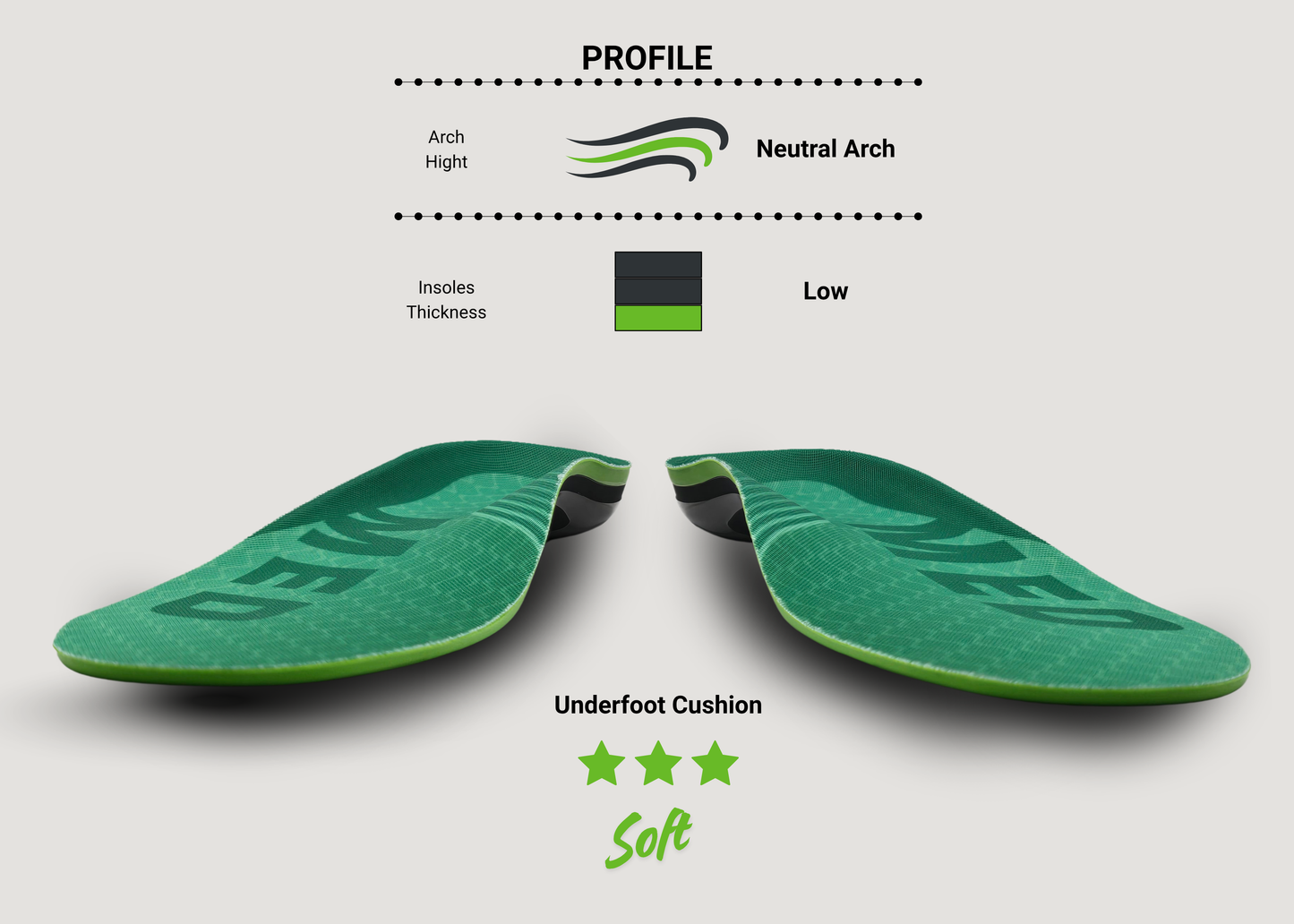
Structured with rigid medial longitudinal arch support and a specialized metatarsal pad ("teardrop"), MED insoles deliver targeted three-way relief:
- Plantar Fasciitis & Heel Spurs: reduces mechanical tension along the plantar fascia, resting the ligament and reducing calcaneal inflammation
- Morton's Neuroma: the metatarsal dome gently elevates and separates metatarsal heads, decompressing the interdigital plantar nerve
- Overpronation & Lower Back Strain: locks the subtalar joint into neutral alignment, arresting internal tibial rotation and relieving lumbar lordosis
Ready-to-use orthopaedic appliance, optimized for everyday use in supportive shoes.
- Anatomical metatarsal dome designed for Morton's nerve decompression
- Therapeutic rigid deep heel cup for stable anatomical axis realignment
- High-stability medial arch contour tested under baropodometric analysis
The Podiatrist's Analysis: Pronation correction and Morton's Neuroma decompression
The Podiatrist's Analysis: Pronation correction and Morton's Neuroma decompression
Morton's Neuroma is a compressive neuropathy involving the common plantar digital nerve, occurring most frequently in the third intermetatarsal space. Chronic mechanical impingement beneath the deep transverse metatarsal ligament induces perineural fibrosis and severe burning pain, diagnosed via Mulder's click sign.
The clinical test: The contoured geometry of MED Orthotic Insoles introduces a raised retrocapital dome that spreads the intermetatarsal space, alleviating focal nerve entrapment and producing substantial symptom relief in conservatively treated patients. Concurrently, the rigid shell controls subtalar pronation, preventing anterior pelvic tilt and reducing compensatory lumbar hyperextension.

Your personal guide
The first step is getting to know you.
Three questions about your routine and the comfort you want. A place to start, chosen for you.
Find your insole